Because where someone lives or what they can afford should not determine whether they receive the care they need.
I’ve often wondered how different a person’s life might be if the place they were born didn’t determine the care they could receive.
I was born in Nigeria. Today I practice surgery in the United States, where I’ve seen what modern medicine can accomplish: patients recovering from life-threatening injuries, people regaining their health after years of suffering, and the difference a timely operation can make. But I’ve never forgotten that in many communities in Nigeria, the very same care remains out of reach. Not because the conditions are untreatable, but because people cannot afford the treatment they need.
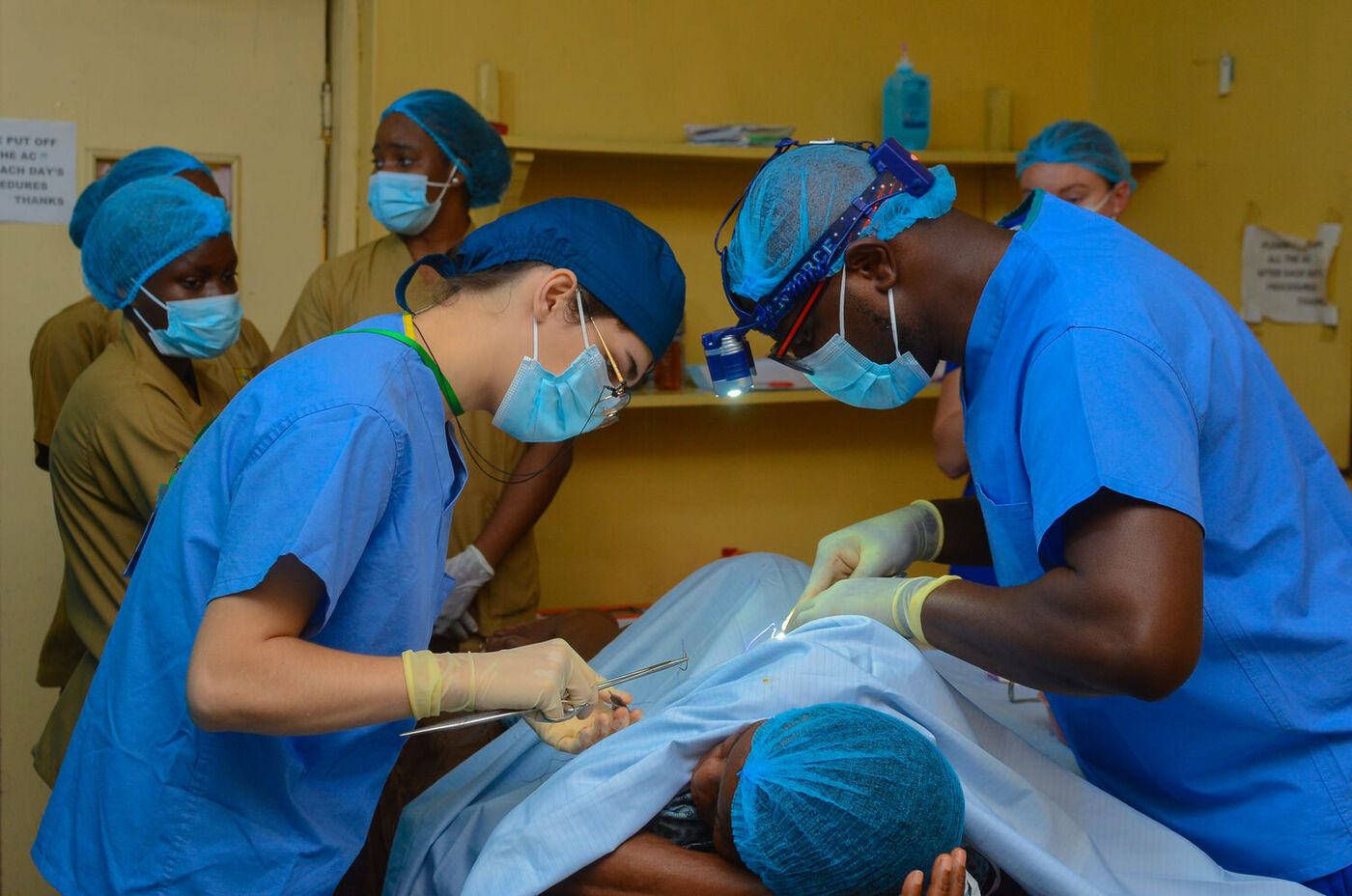
During a mission in Abeokuta, I met a man who had lived for years with a massive inguinal hernia. It had grown so large that he could no longer work, and with it went his ability to provide for his family. The operation he needed is one surgeons perform routinely every day. For him, it had simply been out of reach. We repaired his hernia, giving him the opportunity to return to work and provide for his family.
In another mission, I saw how the consequences of delayed care could be even more serious. In Lagos, we cared for a man with a mass on his knee that had features concerning for malignancy. Without treatment, there was a risk that the disease could progress and threaten his life. Our team removed the mass, providing him with an opportunity to receive care that had previously been out of reach.
Behind every one of those encounters is a person with a family, responsibilities, hopes, and plans for the future. Someone whose ability to work, care for their children, or enjoy the ordinary moments of life has been affected by a condition that medicine already knows how to treat. That conviction is why my wife and I founded Shekinah Global Healthcare Foundation in 2024.
We wanted to bring people together around a simple purpose: using the knowledge, skills, and resources available to us to care for those who might otherwise go without. What began as a desire to serve has grown into a community of healthcare professionals, volunteers, and partners providing free medical and surgical care across Nigeria. Through the medical missions we’ve participated in alongside our partners, including Pro-Health International, Pistis Foundation and Pastor Tunde Bakare, we’ve had the privilege of contributing to efforts that have provided care to more than 12,000 patients, and performed over 780 free surgeries.
But the moments that stay with me most have little to do with the numbers. It’s the relief on a patient’s face when they learn that the surgery they’ve needed for years will finally happen. It’s the gratitude of families who had almost given up hope. It’s watching volunteers work long hours, often in difficult conditions, without expecting anything in return.
None of this is the work of one person. It has been made possible through the generosity, commitment, and sacrifices of volunteers, donors, and partners who believe in what we’re doing. I’m especially grateful for our longstanding collaboration with Pro-Health International, our work with Pistis Foundation, and the support and partnership of Pastor Tunde Bakare. Each has contributed to making care accessible to people who might otherwise have gone without.
My Christian faith is central to why I do this. I believe that the abilities, opportunities, and resources we’ve been given carry a responsibility beyond our own advancement. Faith, to me, is not only something we profess, but something that should find expression in how we live and how we treat others. Medicine has given me a practical way to live out that conviction.
Yet as rewarding as these missions have been, they’ve also reminded me of how much remains to be done. A mission can provide an operation that changes someone’s life, but it cannot, by itself, address the challenges that made that care inaccessible in the first place. Lasting progress requires strong local healthcare systems, continued education and training, reliable resources, and partnerships that extend beyond the days we spend providing care.
That is why our work must be about more than arriving, treating patients, and leaving. It means working alongside local healthcare professionals and partners, sharing knowledge, and supporting efforts that make quality care more accessible long after a mission has ended.
There will always be more patients than we can reach and more communities that need support. But the enormity of a problem should never become a reason to do nothing. We may not be able to change everything, but we can change something for someone.
I do medical missions because compassion should move us beyond recognizing suffering to doing what we can to relieve it. Because the skills we acquire can serve people far beyond the walls of our own hospitals. And because I believe that when we have the opportunity to help, we should.
That is why I do medical missions.
To volunteer, partner with us, or support our next mission, visit Shekinah Global Healthcare Foundation.
Get new articles in your inbox.
Occasional reflections on medicine, leadership, faith and service, plus book and media updates from Dr. Adeboye.
Keep reading
More reflections on medicine, leadership, faith and service are in Insights.